
Skin Disease Treatment: Causes, Types, Symptoms and Ayurvedic Treatment Options
Medically reviewed by Dr. Sangita Bhandare, B.A.M.S, M.D. Samhita — JP Institute of Ayurveda & Medical Science, Patna
Skin problems rarely stay just “skin deep.” A stubborn patch of eczema, a flare-up of psoriasis, or recurring acne can affect sleep, confidence, and daily life long before it affects appearance alone. If you have been searching for effective skin disease treatment, you have probably noticed that most information online is either too technical or too generic to actually help you decide what to do next.
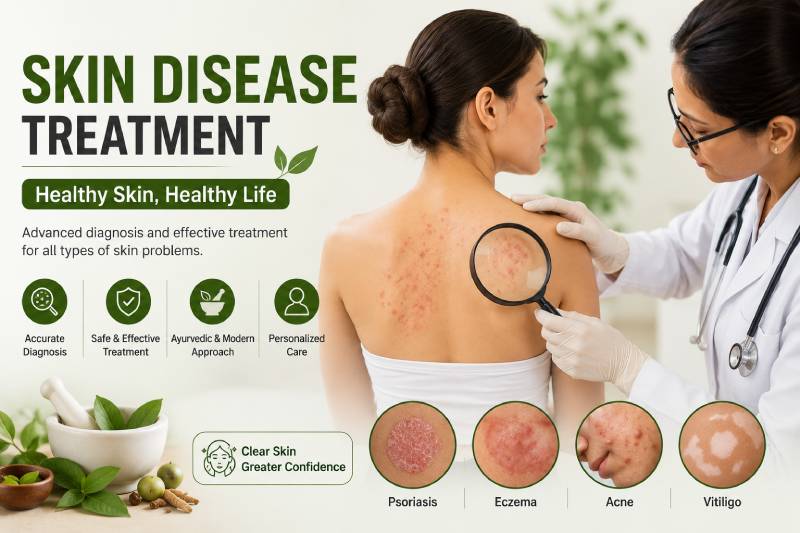
This guide breaks that pattern. It explains what causes skin disease, how doctors and Ayurvedic physicians classify different skin conditions, how a proper treatment plan is built, and what you can realistically expect from Ayurvedic care compared with conventional dermatology. Every recommendation here has been reviewed by a qualified Ayurvedic physician, so you’re getting guidance rooted in clinical experience, not guesswork.
Table of Contents
- What Is a Skin Disease?
- Common Types of Skin Diseases
- What Causes Skin Diseases
- Symptoms That Need Attention
- How Skin Diseases Are Diagnosed
- Skin Disease Treatment Options
- Ayurvedic Skin Disease Treatment Explained
- Ayurveda vs Modern Medicine: Which Approach Fits You
- Diet and Lifestyle Changes That Support Recovery
- When to See a Doctor
- Prevention Tips
- Frequently Asked Questions
What Is a Skin Disease?
The skin is the body’s largest organ, and it reflects what is happening both outside and inside the body. A skin disease is any condition that changes the skin’s texture, color, or function — through inflammation, infection, an autoimmune reaction, a blocked gland, or a genetic tendency. Some conditions are temporary and clear up on their own; others, like psoriasis or eczema, tend to be chronic and require an ongoing management plan rather than a one-time fix.
Ayurveda groups most of these conditions under the broad term Kushtha Roga, describing skin disorders as an external expression of an internal imbalance among the three doshas — Vata, Pitta, and Kapha — combined with accumulated toxins (Ama) in the blood and digestive tissues. This is one reason the Ayurvedic approach looks beyond the visible rash and works on digestion, blood quality, and metabolism at the same time.
Common Types of Skin Diseases
Understanding which category a condition falls into is the first step toward the right treatment approach. Some of the most common types seen in clinics include:
- Eczema (Vicharchika) — dry, itchy, inflamed patches, often linked to allergies or a sensitive immune response.
- Psoriasis (Kitibha Kushtha) — thick, scaly, silvery plaques caused by skin cells multiplying faster than normal.
- Acne and pimples — clogged pores and inflammation, frequently tied to hormonal changes and poor digestion.
- Fungal infections (Dadru) — ring-shaped, itchy patches such as ringworm or athlete’s foot.
- Urticaria (hives) — sudden raised, itchy welts, often an allergic or immune reaction.
- Vitiligo (Shwitra) — loss of skin pigment resulting in pale or white patches.
- Dermatitis — general inflammation of the skin triggered by irritants, allergens, or contact with certain substances.
- Leucoderma and pigmentation disorders — changes in melanin production affecting skin tone.
Each of these needs a slightly different treatment approach, which is why a proper diagnosis always comes first, whether the route chosen is Ayurvedic or conventional.
What Causes Skin Diseases
Modern medicine and Ayurveda broadly agree on the underlying triggers, even though they describe them differently.
Commonly recognised causes include:
- Genetic predisposition and family history
- Weakened or overactive immune response
- Poor gut health and digestive imbalance
- Hormonal fluctuations
- Exposure to allergens, pollutants, or harsh chemicals
- Prolonged stress and disturbed sleep
- Nutritional deficiencies
- Bacterial, viral, fungal, or parasitic infections
In Ayurvedic terms, an aggravated Pitta dosha typically causes redness, burning, and inflammation; excess Vata leads to dryness, roughness, and cracking; and imbalanced Kapha results in itching, oozing, and thickened skin. Identifying which dosha is dominant helps an Ayurvedic physician design a more precise and lasting treatment plan instead of a generic one-size-fits-all remedy.
Symptoms That Need Attention
Not every skin symptom needs urgent medical care, but some patterns are worth tracking closely before they progress:
- Persistent redness, itching, or burning lasting more than two weeks
- Scaly or flaky patches that keep spreading
- Painful or pus-filled bumps
- Sudden swelling, especially around the eyes, lips, or throat
- Skin that cracks, bleeds, or oozes fluid
- A mole or spot that changes shape, size, or colour
- Hair loss accompanying a skin patch
Keeping a simple log of when symptoms appear, what seems to trigger them, and how long they last makes it far easier for a physician to recommend the right treatment on your first visit.
How Skin Diseases Are Diagnosed
A reliable skin disease treatment plan starts with an accurate diagnosis. This usually involves:
- Visual examination of the affected area, its pattern, and distribution across the body.
- Detailed history-taking, including diet, digestion, stress levels, allergies, and family history.
- Pulse and Prakriti assessment in Ayurvedic consultations, to identify the dominant dosha involved.
- Laboratory tests, such as blood work or allergy panels, when an infection or autoimmune cause is suspected.
- Skin scraping or biopsy, in select cases where fungal infection or a deeper condition needs confirmation.
According to the <a href=”https://my.clevelandclinic.org/health/diseases/21573-skin-diseases” target=”_blank” rel=”noopener noreferrer”>Cleveland Clinic</a>, many skin diseases respond well once the correct diagnosis guides the treatment choice, which is exactly why skipping this step in favour of over-the-counter creams often leads to recurring flare-ups.
Skin Disease Treatment Options
Once a diagnosis is confirmed, treatment for the condition generally falls into three broad categories, and most experienced clinicians combine more than one depending on the severity of the condition.
1. Topical Treatment
Creams, ointments, and gels applied directly to the affected area to reduce inflammation, itching, or infection. These work well for mild, localised conditions.
2. Systemic Treatment
Oral medicines, herbal formulations, or injections used when the condition is widespread, recurrent, or linked to an internal imbalance such as poor digestion or an autoimmune trigger.
3. Procedure-Based Treatment
Includes detoxification therapies, laser procedures, or minor surgical interventions for conditions that don’t respond adequately to topical or oral treatment alone.
The <a href=”https://patient.info/treatments-for-skin-conditions” target=”_blank” rel=”noopener noreferrer”>NHS patient guidance on skin conditions</a> notes that moisturisers and topical steroids remain effective for many inflammatory conditions, but chronic or recurring cases usually need a more structured, longer-term plan — which is where Ayurveda’s whole-body approach tends to add real value.
Ayurvedic Skin Disease Treatment Explained
Ayurvedic for Skin Disease Treatment does not stop at symptom relief. It focuses on correcting the internal imbalance believed to be driving the skin condition, using a combination of the following:
- Panchakarma detoxification — a set of five classical cleansing procedures used to remove accumulated toxins from the blood and tissues.
- Vamana (therapeutic emesis) — used for Kapha-dominant conditions such as chronic urticaria.
- Virechana (purgation therapy) — commonly used for Pitta-related conditions like acne and inflammatory rashes.
- Raktamokshana (controlled bloodletting) — traditionally used for skin allergies and blood-related disorders.
- Herbal formulations — customised combinations of neem, turmeric, manjistha, and other herbs known for their blood-purifying and anti-inflammatory properties.
- External therapies — medicated oil application (Abhyanga), herbal pastes (Lepa), and medicated baths to soothe irritation and support skin repair.
- Diet correction (Pathya-Apathya) — removing foods that aggravate the dominant dosha and adding those that support healing from within.
This combination is why patients often describe this Ayurvedic approach as slower to show initial results than a steroid cream, but considerably more durable once the underlying imbalance is corrected. At our Panchakarma treatment centre, each protocol is customised after a detailed Prakriti and dosha assessment rather than applied as a fixed package.
Ayurveda vs Modern Medicine: Which Approach Fits You
| Factor | Modern Dermatology | Ayurvedic Treatment |
|---|---|---|
| Speed of relief | Often faster, especially for acute flare-ups | Gradual, but targets root cause |
| Approach | Symptom and pathogen focused | Whole-body, dosha-based |
| Recurrence | Can recur once medication stops | Aims to reduce recurrence long-term |
| Side effects | Possible with long-term steroid use | Generally gentler with proper guidance |
| Best suited for | Infections, acute allergic reactions, emergencies | Chronic conditions like eczema, psoriasis, vitiligo |
In practice, many patients benefit from combining both — using conventional treatment to control an acute flare-up while an Ayurvedic care plan works on the underlying cause to reduce how often it returns.
Diet and Lifestyle Changes That Support Recovery
No Skin Disease Treatment plan works in isolation from daily habits. Simple, consistent changes make a measurable difference over a few weeks:
- Reduce fried, processed, and excessively spicy or sour foods that aggravate Pitta.
- Increase water intake and include cooling, fibre-rich foods like cucumber, bottle gourd, and leafy greens.
- Prioritise 7–8 hours of sleep, since poor sleep worsens most inflammatory skin conditions.
- Manage stress through yoga, pranayama, or meditation, as stress hormones directly influence flare-ups.
- Avoid scratching or over-washing affected areas, which can delay healing.
- Use mild, fragrance-free products and always patch-test anything new.
When to See a Doctor
Book a consultation rather than self-treating if you notice any of the following:
- A rash or patch that hasn’t improved after two to three weeks of home care
- Spreading infection, fever, or visible pus
- A skin condition that is affecting sleep, work, or mental well-being
- Recurring flare-ups despite consistent skincare
- Any mole or growth that looks unusual or is changing
Early, accurate diagnosis almost always leads to a shorter and more effective treatment journey than waiting until the condition becomes severe.
Prevention Tips
- Maintain a consistent, gentle skincare routine suited to your skin type
- Keep digestion healthy with fibre-rich, seasonal foods
- Manage known allergens and irritants proactively
- Get periodic skin check-ups if you have a family history of skin conditions
- Stay consistent with any prescribed treatment even after visible symptoms improve, to reduce relapse
Frequently Asked Questions
1. What is the most effective skin disease treatment for chronic conditions like psoriasis and eczema? There is no single “most effective” answer, since it depends on severity, dosha involvement, and how long the condition has persisted. A combination of Panchakarma detoxification, herbal formulations, and diet correction typically shows the most durable results for chronic cases.
2. Can Ayurvedic treatment completely cure skin conditions? Many patients experience significant, lasting improvement, especially with consistent follow-through on diet and lifestyle changes. However, some genetic or autoimmune-linked conditions are better described as “well-managed” rather than permanently cured, and your physician can set realistic expectations after an assessment.
3. How long does Ayurvedic treatment take to show results? Mild conditions may improve within 3–4 weeks, while chronic conditions such as psoriasis or vitiligo often need 3–6 months of consistent treatment for visible, lasting change.
4. Is it safe to combine Ayurvedic and allopathic treatment for skin disease? Yes, in many cases, but always inform both physicians about what the other has prescribed so they can coordinate the plan safely.
5. Are Ayurvedic skin treatments suitable for children and elderly patients? Most herbal and external Ayurvedic therapies are gentle enough for a wide age range, but dosage and procedure selection should always be personalised by a qualified physician rather than self-administered.